Spring Hill's homes sit on a mix of crawl spaces and slabs, and a leak or a heavy rain takes a different path in each. The first useful fact after any water event is which kind of foundation the house has.
Key takeaways
- Spring Hill homes are built on a mix of crawl space and slab foundations, so the same leak can behave very differently from one street to the next.
- Water on a slab spreads across the floor and wicks into the bottoms of walls, while water under a raised floor soaks insulation, the vapor barrier, joists and subfloor out of sight.
- Spring Hill's humid summers raise crawl space humidity, so damp air and standing water have to be told apart.
- Heavy rain in May 2010 and flash flooding in March 2021 are the local reminders that storm water reaches low ground quickly.
- A crawl space is pumped out, stripped of wet insulation and dried until readings reach a dry reference, after the source is found.
Find out which foundation the house has
Many owners do not know, especially in a house they did not build. A raised floor with a small access hatch or foundation vents usually means a crawl space, and a floor poured directly on the ground is a slab.
The answer matters for every later decision: where to look for water, which equipment is used and how long drying takes.
A few quick checks usually settle it:
- An access hatch in a closet floor, a hallway or the garage points to a crawl space.
- Foundation vents or a low access door on an outside wall also point to a crawl space.
- Bare concrete in the garage and a floor that stays cold in winter suggest a slab.
- The closing papers and the inspection report from the purchase usually say which one it is.
Young homes still get wet
Most homes in Spring Hill are young, since the city grew from 1,464 residents in 1990 to 50,005 in 2020. A young house still has plumbing, an air handler and a foundation, and any of them can put water where it does not belong.
When water reaches a slab home
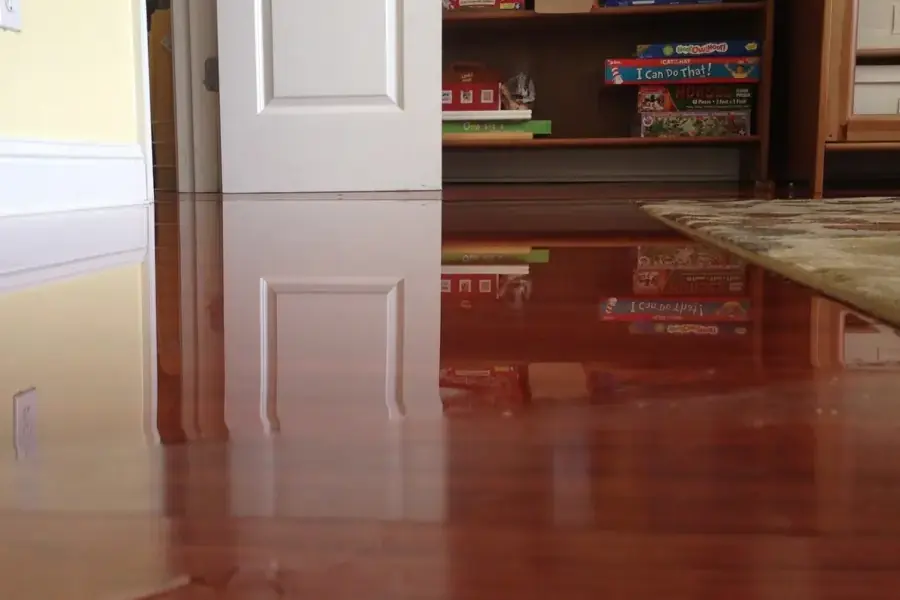
On a slab, water spreads across the floor and wicks into the bottoms of walls, cabinets and doors. The water stays in the living space instead of hiding below it, so most of the damage shows quickly.
Water extraction removes what is standing, and then the drying team checks these places first with a meter:
- Flooring and the pad under carpet
- Baseboards and the bottom of the drywall
- Cabinet bases and doors
- Furniture legs and stored items on the floor
A leak in a pipe under the slab
A leak in a pipe under the slab looks different: a warm spot on the floor, the sound of running water with every tap closed or a bill that climbs for no clear reason. A plumber has to locate it before any drying makes sense.
When water reaches a raised floor
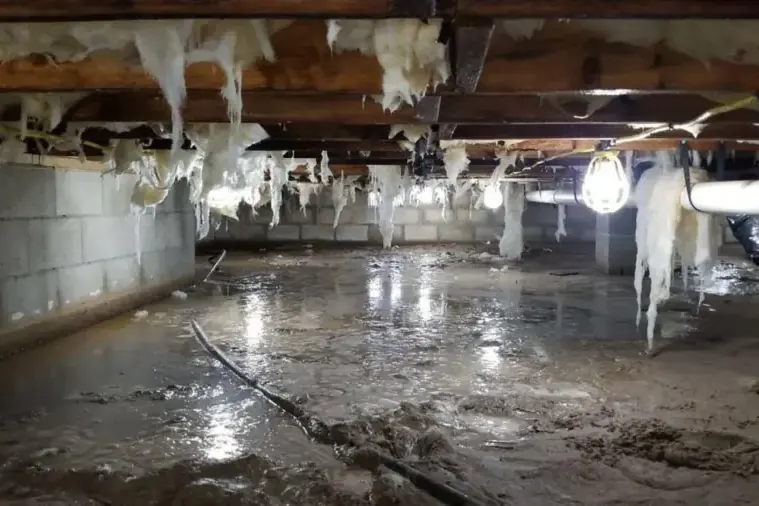
Under a raised floor, water has room to travel and places to hide: insulation, the vapor barrier, joists and the subfloor. It can sit there for days before a soft spot or a smell gives it away.
Rain runoff, groundwater and plumbing leaks can all leave water under a home, which is why the source matters as much as the pumping. Spring Hill's humid summers add a second problem, crawl space humidity, and damp air alone can wet insulation and framing without any puddle.
Signs of water under the floor are often felt before they are seen:
- Floors that feel soft, bouncy or cupped
- A musty smell near floor vents or in a closet over the hatch
- Insulation that sags or lies on the ground
- Condensation on ducts or pipes under the floor
- Doors that begin to stick
Where the cleanup starts
A crawl space water removal job starts by finding which of those sources is at work, since pumping out water without stopping its source only buys time.
Telling damp air from standing water
A flashlight and a careful look from the hatch settle most of the question, as long as nobody crawls in near a puddle and wiring.
The usual possibilities look like this:
- Standing water: a visible puddle or wet soil that shines, often with sagging insulation above it.
- Damp air: no puddle, but beads of water on ducts and pipes, a musty smell and insulation that feels clammy.
- A plumbing leak: dripping or a steady wet spot under one fixture.
- Runoff: water that follows the low side of the yard to one wall.
What the cleanup does under the floor
The crew pumps out standing water with submersible pumps and uses wet vacs for the low spots. Wet insulation comes out, because it holds water against the subfloor.
Torn or soaked vapor barrier is removed or reset, and the joists and subfloor are dried with air movers and dehumidifiers. The structural drying step ends with readings at a dry reference, not with a floor that only looks dry.
The order of work stays the same from one house to the next:
- Find and stop the source
- Pump and vacuum standing water
- Remove wet insulation and torn vapor barrier
- Dry the joists and the subfloor
- Log the readings every day
After a creek flood or a heavy rain
Spring Hill's creeks include Rutherford Creek and McCutcheon Creek. The Tennessee flood of May 1 to 2, 2010 brought record rain and creeks at record levels, and flash flooding on March 27 to 28, 2021 closed Beechcroft Road and Old Kedron Road.
Those storms show how fast water reaches low ground. A slab home and a crawl space home need the same first check, which is where the water entered and what is still wet, and creek water also changes the cleanup, as covered in storm and flash flood cleanup.
Common ways water gets in after heavy rain:
- Water coming in under a garage door or an entry threshold
- Water pooling against one wall of the foundation
- Runoff reaching the vents or the hatch of a crawl space
- Soaked floor coverings and low drywall inside the house
Why drying starts right away
Wet materials can begin growing mold within 24 to 48 hours, which is why drying starts as soon as the water is out.
Questions
How can a homeowner tell whether the house has a crawl space or a slab?
An access hatch in a closet, hallway or garage floor, or foundation vents on the outside wall, point to a crawl space. A floor poured directly on the ground is a slab, and the closing papers usually say which.
Is a damp crawl space the same as a flooded one?
No. Damp air leaves moisture on ducts, pipes and insulation, while standing water shows as a puddle or wet soil. Both can wet framing, but they have different causes and different fixes.
Can a crawl space be dried without removing insulation?
Not when the insulation is soaked. Wet insulation holds water against the subfloor, so it is removed and replaced after the framing is dry.
How long does a wet crawl space take to dry?
Longer than a room above ground. Readings on the joists and subfloor decide, and the drying team keeps equipment running until they reach a dry reference.
Is it safe to climb into a wet crawl space?
Not with standing water near wiring or with the power to the space on. Look from the hatch with a flashlight and let a crew with protective gear go in.
Does homeowners insurance cover water under the house?
A sudden plumbing leak is generally covered, while rising groundwater or surface flooding usually needs a separate flood policy. Check the policy and report the loss promptly.