Structural Drying and Dehumidification in Spring Hill, TN
Surface-dry is not dry. The drying team sets LGR dehumidifiers and air movers to each room's load and takes daily readings until framing, subfloor and drywall match a dry reference.
(888) 849-5796Get Spring Hill structural drying going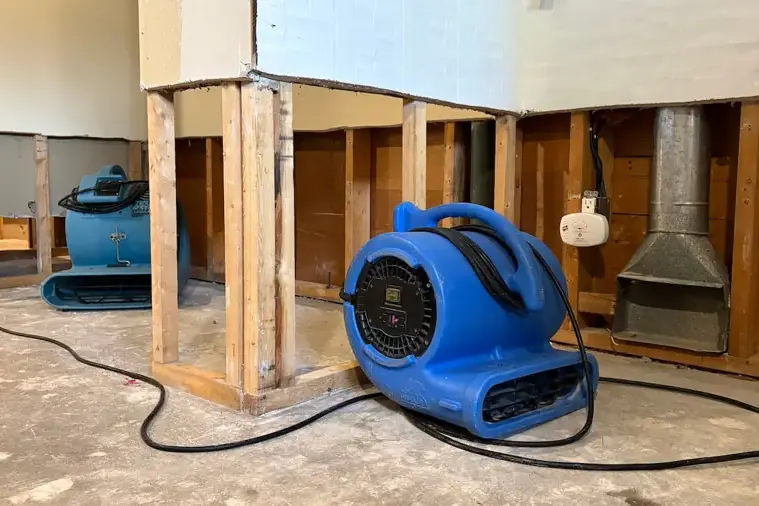
First steps for structural drying and dehumidification in Spring Hill
- 1
Leave the equipment running
Air movers and dehumidifiers work around the clock. Turning them off at night adds days.
- 2
Keep doors and windows closed
Outside air in a humid Spring Hill summer adds moisture, so keep the drying area closed up unless the crew says otherwise.
- 3
Leave the air movers where they are
Each unit is aimed at a wet surface. Moving one leaves a wet spot behind.
- 4
Watch the drain hose
If a dehumidifier drains into a sink or bucket, keep the hose in place and tell the crew if it stops draining.
How structural drying and dehumidification is handled in Spring Hill
Structural drying is the part of water damage restoration nobody sees and everything depends on. Water that soaked into framing, subfloor, drywall and concrete stays there long after the floor looks dry, and if it is not removed it warps floors, loosens drywall tape and opens the 24 to 48 hour mold growth window. In Spring Hill homes, where humid summers keep indoor air damp, the drying team controls the air as well as the surfaces and lets readings, not the calendar, decide when the job is done.
What does structural drying and dehumidification cost in Spring Hill, TN?
Structural drying in Spring Hill typically costs $1,000 to $4,500, depending on the class of loss, the number of rooms, the materials involved and how many days the equipment runs.
One room
- Class 1 or 2 loss
- Air movers and one dehumidifier
- Three days of readings
Several rooms
- Class 2 or 3 loss
- LGR dehumidifiers and air movers
- Daily psychrometric logs
Class 4 or large loss
- Hardwood, plaster or concrete
- Desiccants and drying mats
- Longer monitoring
Ranges are typical, not a quote: the category of water, square footage, material class and how fast drying started move the number most. Run the Spring Hill water damage cost calculator for a closer range.
The structural drying and dehumidification process in Spring Hill
Set the baseline
A dry reference reading and a moisture map show what is wet and how wet.
Size the equipment
Air movers and dehumidifiers are calculated from the class of loss and the room volume.
Monitor daily
Temperature, humidity and moisture readings are logged every day and the equipment is adjusted.
Confirm dry
Equipment comes out only when materials read within 2 to 4 points of the dry reference.
Structural Drying and Dehumidification in Spring Hill: what to know
How the equipment works together
- Air movers: push dry air across wet surfaces so water evaporates faster, set to each room's evaporation load
- LGR dehumidifiers: low grain refrigerant units pull that evaporated water out of the air, even when the air is already fairly dry
- Desiccant dehumidifiers: used for Class 4 materials such as hardwood, plaster and concrete, and in cold conditions
- Drying mats and injection systems: force air through hardwood floors and wall cavities
The class of loss, from Class 1 to Class 4, sets how much of each a room needs.
Readings decide when it is dry
Before equipment goes down, the tech who does the walkthrough takes a reading on a dry reference material of the same type elsewhere in the home. Every day after that, the drying team logs temperature, relative humidity and moisture content in each room, the psychrometric record an adjuster expects. Equipment stays until wet materials read within 2 to 4 points of that dry reference, the goal set by the IICRC S500 standard. A contained loss usually takes three to five days; hardwood, concrete and a soaked crawl space take longer.
Homes and businesses
The same method dries a single bathroom and a commercial space. Offices, shops and apartment buildings along Main Street get drying zones set up so work can continue around the equipment, with containment where needed and readings shared with the property manager. Energy Saver from the Department of Energy explains how moisture moves through a building, and the EPA indoor air quality pages cover why moisture control matters indoors.
Why drying is not a fan job
A household fan moves air but does not remove water from it, so the moisture it lifts off the floor settles into the walls and furniture instead. Commercial drying works because evaporation and dehumidification are balanced: air movers speed evaporation while dehumidifiers take the water out of the room. The process starts with water extraction, because every gallon pulled out as liquid is one the dehumidifiers never have to handle.
Structural drying and dehumidification across Spring Hill and nearby towns
Spring Hill Water Damage Restoration covers Spring Hill, ZIP 37174, on both the Maury County and Williamson County sides: Harvest Point, Hardins Landing, Port Royal Estates and Kings Creek in the south, Wakefield, Cherry Grove, Benevento East and Wades Grove in the north.
Nearby coverage reaches Thompson's Station, Columbia, Franklin, Mount Pleasant, Lewisburg, Fairview, Chapel Hill, Culleoka.
Related water damage services in Spring Hill
Structural Drying and Dehumidification questions in Spring Hill, TN
Still wet in Spring Hill?
Walls and floors still wet? The drying team sets equipment 24/7.
(888) 849-5796 Drying help in Spring HillWhat does structurally dry mean?
It means the framing, subfloor, drywall and concrete are back to their normal moisture level, confirmed with meters against a dry reference material, not just dry to the touch.
Why do the dehumidifiers run all night?
Evaporation and dehumidification work continuously. Turning equipment off lets humidity climb back up, so materials stop drying and the job takes longer.
How long does structural drying take?
Three to five days is typical for a contained loss. Hardwood, plaster, concrete and crawl spaces can take a week or more, and daily readings show progress.
What is an LGR dehumidifier?
A low grain refrigerant dehumidifier keeps pulling water out of air that is already fairly dry, which lets it finish drying wood and drywall faster than a household unit.
Can I stay in the house during drying?
Usually, yes. The equipment is loud and adds heat, so some families stay elsewhere for the first nights, especially when drying runs in bedrooms.
Is structural drying covered by insurance?
Drying after a covered water loss is usually part of the claim, and the daily logs support it. Coverage depends on your policy, so check with your own insurer.
Still wet in Spring Hill? Get the drying started today.
Surface-dry is not dry. The drying team measures, sets LGR dehumidifiers and air movers and logs readings until the structure is dry.
(888) 849-5796Start Spring Hill structural drying