Structural Drying and Dehumidification in Lewisburg, TN
After water is removed, the structure still holds moisture. Air movers and dehumidifiers dry framing, subfloor and drywall, and daily readings show when each material is back to normal.
(888) 849-5796Call about drying a wet house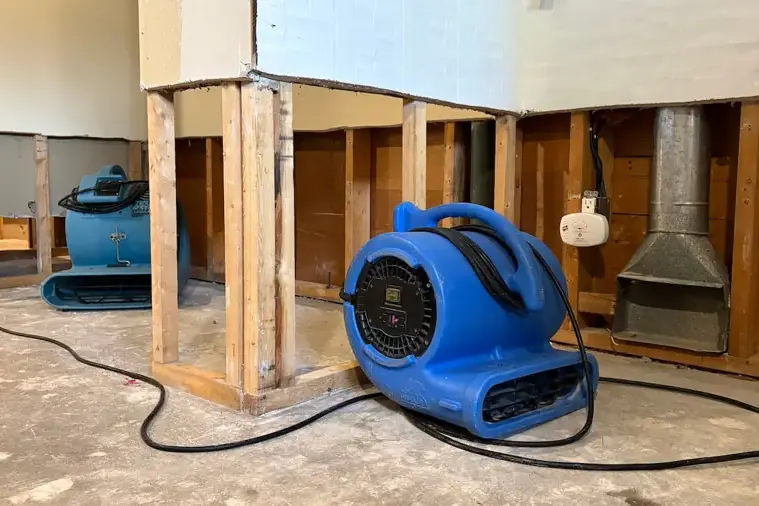
First steps for structural drying and dehumidification in Lewisburg
- 1
Stop adding water
Make sure the leak is fixed and the supply is off, because drying cannot keep up with a source that is still running.
- 2
Open the space
Open closet doors, cabinet doors and wall access panels so air can reach the places water went.
- 3
Leave the equipment on
Keep dehumidifiers and air movers running between visits, since switching them off restarts the wetting cycle.
- 4
Keep a record
Note the equipment locations and the daily readings the tech shares, and keep photos of every wet area.
How structural drying and dehumidification is handled in Lewisburg
Taking water out is half the job. Wood framing, subfloor, drywall and insulation keep moisture long after the puddles are gone, and a house that looks dry can still read wet on a meter. Structural drying uses controlled airflow and dehumidification to bring each material back to its normal moisture level, and the result is measured rather than guessed.
What does structural drying and dehumidification cost in Lewisburg, TN?
Structural drying in Lewisburg runs $500 to $1,200 for one room, $1,200 to $4,500 across several rooms, and $4,500 to $12,000 for a Class 4 or large loss.
One room
- A light, contained loss
- A few air movers, one dehumidifier
- Readings through the dry-down
Several rooms
- Wet carpet, drywall or framing
- LGR units and more air movers
- Psychrometric logs each day
Class 4 or large loss
- Dense wood, plaster or masonry
- Desiccant units and mats
- Longer monitoring period
Ranges are typical, not a quote: the category of water, square footage, material class and how fast drying started move the number most. Run the water damage cost calculator for a closer range.
The structural drying and dehumidification process in Lewisburg
Measure and classify
The tech maps wet materials, records temperature and humidity, and sets a dry reference.
Place the equipment
Air movers, dehumidifiers and mats are positioned from the readings, with cavities opened or vented.
Monitor every visit
Readings are retaken on each visit, and equipment is moved or removed as materials dry.
Confirm and release
Final readings match the dry reference, the equipment leaves, and the logs go to the homeowner.
Structural Drying and Dehumidification in Lewisburg: what to know
Why Lewisburg homes need a drying plan
County soil survey records show about 54 inches of precipitation a year, and creek flooding has threatened homes here, so wet structures are not rare. A roof leak after hail, a pipe failure in winter or a creek surge all leave moisture in the same places: wall cavities, subfloors and framing. The plan is built around those hiding spots instead of the visible stain.
The equipment and what each piece does
A drying setup is built from a short list:
- LGR dehumidifiers pull moisture from the air
- Air movers push dry air across wet surfaces
- Drying mats lift water out of hardwood
- Desiccants help with dense materials like plaster
The mix changes by room. Carpeted rooms need more air movement, hardwood needs mats, and a closed wall cavity may need injected air or small vent openings instead of tearing the wall out.
Readings that decide when it is done
At each visit the tech records temperature, humidity and the moisture content of drywall, framing and subfloor, then compares them with a dry reference taken from unaffected materials in the same home. Equipment is moved or removed based on those numbers, and the job ends when the wet materials match the reference, not when a calendar date arrives.
Classes of water damage
A small spill in one room is a light loss, while water in hardwood, plaster or concrete is a heavy one that needs desiccants and longer monitoring. The class of loss drives the equipment count, the number of days and the price tier, and the tech sets it after the first round of readings. Pipe bursts and floods often reach the upper classes, so burst pipe water damage jobs usually need the full setup.
Living with the equipment
Dehumidifiers and air movers are loud and warm the room, and they run continuously for days. The electric draw is real, and so is the noise, but shutting equipment down too soon is the most common reason walls stay wet inside. Musty odors and visible growth are signs that a cavity was missed.
Structural drying and dehumidification across Lewisburg and nearby communities
Structural drying runs across Lewisburg, from houses in neighborhoods such as Southview and Spring Valley Estates to apartments, duplexes and commercial buildings along Nashville Highway and Ellington Parkway. Any loss from a pipe, roof, appliance or creek can need it.
The same service nearby: structural drying and dehumidification in Spring Hill, Columbia, Mount Pleasant.
Related water damage services in Lewisburg
Structural Drying and Dehumidification questions in Lewisburg, TN
Still wet in Lewisburg?
A house that looks dry can still read wet, so describe what was wet and the drying plan is built from the readings.
(888) 849-5796 Lewisburg drying helpWhy does a dry-looking wall need drying?
Surfaces dry first while framing, insulation and the back of drywall hold moisture. A meter reads what the eye cannot, and wet materials left in place can warp, swell and support growth.
How long does structural drying take?
It depends on the materials and the class of loss. Light, clean-water losses dry faster, while hardwood, plaster and concrete take longer, and readings decide the end date.
Do the machines have to run all day?
Yes, because drying works only while the equipment keeps moving air and pulling humidity. Switching it off early lets moisture soak back into the dried layers.
What is an LGR dehumidifier?
A low grain refrigerant dehumidifier removes moisture even when the air is already fairly dry, which makes it better suited to drying structures than a household unit.
Can walls be dried without removing drywall?
Often, when the water was clean and the drywall is intact. Injected air or small vent openings reach the cavity, but saturated or contaminated drywall is removed instead.
Does drying come after extraction?
Yes. Water extraction removes the bulk water first, and drying then removes the moisture held in wood, drywall and subfloor.
Is the house really dry?
The drying team sets equipment from meter readings, logs the numbers daily and removes it only when materials match.
(888) 849-5796Call the drying team