Structural Drying and Dehumidification in Columbia, TN
Surfaces dry first and structure dries last. The Columbia team places air movers and dehumidifiers from moisture readings and keeps measuring until the wood and drywall reach a dry reference.
(888) 849-5796Call about drying a wet Columbia home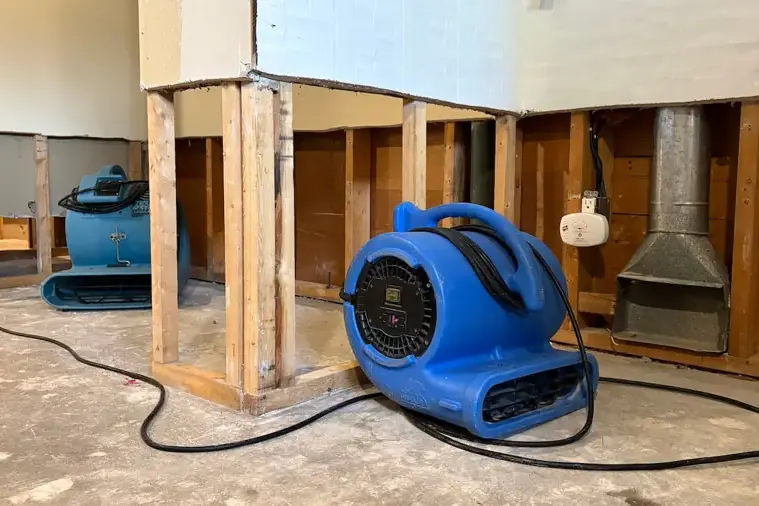
First steps for structural drying and dehumidification in Columbia
- 1
Keep the structure open
Leave doors and cabinets open and do not seal wet rooms with plastic, so the crew can read and plan the airflow.
- 2
Do not turn up the heat
Hot air alone does not dry framing and can push water deeper. Let the team set the temperature and airflow from readings.
- 3
Protect finished items
Lift belongings, books and electronics out of wet rooms, and leave wet carpet and drywall for inspection.
- 4
Keep the equipment on
Once drying equipment is running, leave it plugged in and running, because it is set up for the whole job.
How structural drying and dehumidification is handled in Columbia
Drying a building is a measurement job. Air that feels dry can hide framing, subfloor and plaster that are still holding water, so the work is guided by meters and a daily log rather than by feel. That log is also what an adjuster looks for when a claim is reviewed. Columbia's hot, humid summers add to the challenge, because the air outside is already carrying plenty of moisture.
What does structural drying and dehumidification cost in Columbia, TN?
A one room loss with air movers and a dehumidifier often costs $500 to $1,200, several rooms $1,200 to $4,500, and a Class 4 or large loss $4,500 to $12,000.
A single room
- Small, simple water loss
- Air movers and one dehumidifier
- Readings during drying
Several rooms
- Wider and wetter structure
- LGR dehumidifiers and more airflow
- Daily temperature and humidity logs
Class 4 or very large
- Dense hardwood, plaster or concrete
- Desiccant units and drying mats
- Extended monitoring visits
Ranges are typical, not a quote: the category of water, square footage, material class and how fast drying started move the number most. Run the water damage cost calculator for a closer range.
The structural drying and dehumidification process in Columbia
Map the moisture
Meters and a thermal camera mark every wet surface, and a dry room supplies the reference reading.
Place the equipment
Air movers and dehumidifiers are sized to the wet volume and aimed across the wet materials.
Read every visit
Moisture, temperature and humidity are logged, and equipment is moved or removed as numbers fall.
Confirm dry
Final readings match the reference, equipment leaves, and the log and photos are delivered.
Structural Drying and Dehumidification in Columbia: what to know
How the equipment is chosen
A small clean-water loss may need a few air movers and one dehumidifier, while a large or contaminated loss calls for LGR dehumidifiers, desiccants and more airflow. The tech works out the room volume and the wet area, places equipment to move air across wet surfaces and sets the dehumidifier to pull the moisture out of that air. Equipment is rechecked every visit, because the numbers change as water leaves the materials, and units that are no longer needed are pulled out.
Hardwood, plaster and concrete
Dense materials release water slowly, so they get their own methods.
- Hardwood: drying mats pull water up through the boards
- Plaster and thick drywall: directed air and heat across the surface
- Concrete: dehumidifiers and time, with readings from the slab
- Wall cavities: small openings with air pushed through
Slower materials are the reason a drying job can run past a few days. Hardwood that has been wet for a long time may cup or buckle even after it reads dry, so the final decision about replacement waits for the readings.
After river flooding or a hard winter
The Duck River at Columbia crested at 44.91 feet in May 2010, and a flood like that can leave whole structures wet at once, from the subfloor to the wall cavities. Frozen pipe thaws and storm roof leaks soak large areas the same way. In each case the drying plan covers the structure, not just the visible floor.
When the job is finished
Equipment leaves only when readings from the wet areas match the dry reference taken in an unaffected room of the same home. If a reading stays high, the team keeps drying or opens the area further instead of closing it up. The written log, with photos and daily numbers, becomes part of the claim. The drying time estimator gives a rough range, and water extraction is the step that comes before drying begins.
Structural drying and dehumidification across Columbia and nearby communities
Structural drying runs across Columbia, from houses and apartments near Riverside Drive, Second Avenue and East Seventh Street to subdivisions such as Morgan Meadows and Ridgeview Oaks, throughout ZIP code 38401 and the wider Maury County area.
The same service nearby: structural drying and dehumidification in Spring Hill, Mount Pleasant, Thompson's Station.
Related water damage services in Columbia
Structural Drying and Dehumidification questions in Columbia, TN
Still wet in Columbia?
A structure that looks dry can still be wet inside. Describe what happened and the team will explain how drying is measured.
(888) 849-5796 Columbia drying helpHow long does structural drying take?
Most losses need three to five days, but dense materials such as hardwood, plaster and concrete can take longer. The readings decide, not the calendar.
Why are the machines so loud and so many?
Air movers and dehumidifiers work as a system. Moving air across wet surfaces and removing moisture from that air is what actually dries the structure.
Can the equipment be turned off at night?
It should keep running, because stopping it lets humidity climb and slows progress. The team sets it up so it can run safely around the clock.
Will drying raise the electric bill?
Drying equipment draws power, and insurers often consider that as part of the loss. The team records the equipment and run days so the claim can reflect it.
How does the team know it is dry?
Readings from wet materials are compared with a dry reference taken from an unaffected area of the same home, and the job ends when they match.
Does a humid Columbia summer slow drying?
Yes. Humid outdoor air carries moisture, so dehumidifiers matter more and windows stay closed while equipment runs. Drying takes more control, not more waiting.
Dry it until the numbers say so
The Columbia crew places equipment from readings, checks every visit and delivers a written log with photos at the dry reference.
(888) 849-5796Call about drying a Columbia home