Water Extraction and Removal in Thompson's Station, TN
Standing water, wet carpet and soaked wall bases come out first in Thompson's Station homes, then the drying team measures what is left in the structure with a moisture meter and records every reading.
(888) 849-5796Thompson's Station standing water help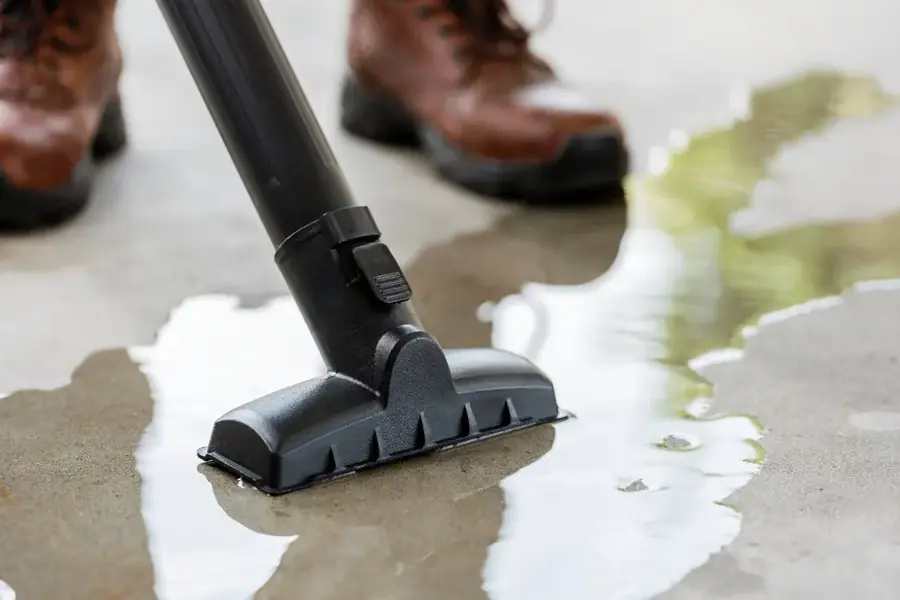
First steps for water extraction and removal in Thompson's Station
- 1
Stop the source
Close the shutoff valve for a pipe or appliance leak, then switch off power to wet rooms.
- 2
Note the water type
Clear supply water, cloudy appliance water and creek or sewage water call for different handling, so tell the crew where it came from.
- 3
Move what you can
Lift furniture, shoes and rugs out of the wet area and set wood legs on foil or blocks so stain does not transfer.
- 4
Photograph everything
Take wide and close photos of wet floors, walls and belongings before cleanup starts, because the claim file begins with them.
How water extraction and removal is handled in Thompson's Station
Standing water in a house does not wait. On August 8, 2026, public reports relayed by the National Weather Service described significant flooding near Thompson's Station along Kennedy Creek, a reminder that creek water can rise quickly and end up on a floor. Water extraction is the first job once the source is stopped: the water comes out before any drying equipment goes in, since carpet, pad and wall bases hold more water than the surface suggests.
What does water extraction and removal cost in Thompson's Station, TN?
Extraction here usually costs $400 to $900 for one room, $900 to $2,500 across several rooms, and $2,500 to $6,000 when the water is contaminated or the area is large.
One room
- Clean water on one floor
- Wand extraction and meter check
- Wall bases probed for moisture
Several rooms
- Wet carpet and pad in several rooms
- Truck-mounted vacuum extraction
- Furniture lifted and blocked
Contaminated or large
- Gray or black water involved
- Pad pulled and carpet removed
- Antimicrobial before drying
Ranges are typical, not a quote: the category of water, square footage, material class and how fast drying started move the number most. Run the water damage cost calculator for a closer range.
The water extraction and removal process in Thompson's Station
Assess the water
The tech checks the source, the water category and the spread with a moisture meter.
Extract the standing water
Wands and a truck-mounted vacuum lift water from floors, with weighted tools for carpet.
Remove what cannot dry
Soaked pad and ruined wall base are cut out, then surfaces are cleaned and treated.
Hand off to drying
Readings are logged, equipment is set, and the drying team takes over the wet structure.
Water Extraction and Removal in Thompson's Station: what to know
What extraction actually removes
Extraction pulls loose water off hard floors and out of carpet and pad using weighted wands, flat tools and truck-mounted vacuums. Pad is checked first, since it acts like a sponge under the carpet and often cannot be saved after a heavy soaking. The tech who does the walkthrough also probes baseboards and the lower drywall with a moisture meter, because water travels sideways from the wet floor into the wall base. Wet vacuums handle the final film of water that the larger tools leave on hard surfaces.
While waiting for the extraction crew
A few safe moves limit the spread while the extraction crew is on the way.
- Shut off the source if it is a pipe or appliance
- Turn off power to wet rooms at the breaker panel
- Lift furniture legs onto foil or blocks
- Skip household vacuums on wet floors
Photos of the wet areas before anything moves give the adjuster a clear starting point.
Clean, gray and black water
The category of water decides how far extraction goes. Clean water from a supply hose can often be removed and dried in place. Gray water from a washer or dishwasher needs more cleaning, and creek or sewage water is treated as Category 3, which means porous materials such as carpet and pad usually come out instead of being dried. Creek floodwater always falls in that last group.
When the carpet can stay
Carpet can sometimes be saved when the water was clean, the loss is recent and the pad is lifted and dried separately. Waiting changes that, because pad that stays wet for days starts to smell and the carpet backing delaminates. Hardwood and laminate are judged by moisture content rather than by how they look, since boards that seem fine on the surface can still be wet underneath.
After the water is out
Extraction is only half of the job. Moisture left in framing and subfloors keeps feeding the damage, so the drying team sets air movers and dehumidifiers and logs readings each day. For a rough schedule, try the drying time estimator. The equipment side is covered under structural drying in Thompson's Station. Mold can begin to grow within 24 to 48 hours on wet materials, which is why extraction comes first.
Water extraction and removal across Thompson's Station and nearby communities
Extraction work covers homes across Thompson's Station, from Tollgate Village and Bridgemore Village to Fields of Canterbury, Allenwood and Littlebury, plus businesses in Town Center and the Heritage Commons Commercial District. Most addresses use ZIP code 37179, which also reaches into Spring Hill.
The same service nearby: water extraction and removal in Spring Hill, Columbia, Fairview.
Water damage restoration in Thompson's Station Every town covered
Related water damage services in Thompson's Station
Water Extraction and Removal questions in Thompson's Station, TN
Still wet in Thompson's Station?
Tell a local water damage expert what the floor looks like and where the water came from.
(888) 849-5796 Describe the wet floorHow fast does water need to come out?
As soon as the source is stopped. Standing water soaks into pad, wall bases and subfloors, and the longer it sits, the more material has to be removed instead of dried.
Can carpet be saved after extraction?
Often yes when the water was clean and the pad is lifted promptly. Contaminated water, or carpet that stayed wet for days, usually means replacement.
Does floodwater from a creek need special handling?
Yes. Creek water carries mud and bacteria and is treated as Category 3, so removal, cleaning and disinfecting come before any drying equipment is set.
Is a wet vac enough for a flooded room?
A shop vacuum handles a thin film on tile. It cannot pull water out of carpet pad, and it leaves wall bases and subfloors wet, which is why a moisture check should follow.
Who should be told about the water loss?
The insurer, and the landlord for a rented home. Photos, the source of the water and the date it started help the adjuster, and the extraction crew can add moisture readings to the file.
Does extraction include drying the house?
Extraction removes the loose water. Drying the wet structure is the next stage, handled with air movers and dehumidifiers, and it is priced and scheduled with the readings in hand.
Water on a Thompson's Station floor?
The extraction crew can check the source, pull the standing water and start the drying plan for the whole house.
(888) 849-5796Call about Thompson's Station water